


Harsh Wardhan Jog wrote a new post 12 years, 8 months ago
What is a Pass Book?
A Pass Book can be defined as a paper booklet issued by a banker to a customer recording therein entries of deposits and withdrawals made. Alternatively it can also be said to be a copy of […]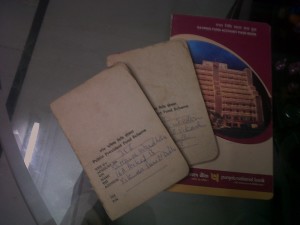
Neva Sievwright became a registered member 12 years, 8 months ago

Welcome to the site. Complete your brief profile, image and social networking so that your friends can find you easily- http://webquestionanswers.com/how-to-login-help-and-guidelines/

JB GUPTA wrote a new post 12 years, 8 months ago
Today when the interest rates have fallen from 14% in nineties to just 8% per annum coupled with falling value of rupee and skyrocketing inflation the public is in dilemma as to where to invest their hard earned […]
Kerstin Atkinson became a registered member 12 years, 8 months ago
-
Welcome to the site. Just complete your brief profile and image. In case of any problems, contact : http://webquestionanswers.com/how-to-login-help-and-guidelines/
Webmaster
-
Harsh Wardhan Jog commented on the post, Have you replaced Smart Credit Card from Bank with PIN and CHIP 12 years, 8 months ago
In June 2013, RBI had extended the the date of changing to chip based card till Nov 2013. Most of the private banks have already done so but not PSBs who have been slower.
It is not generally happening as […] -
JB GUPTA wrote a new post 12 years, 8 months ago
In European countries the banks issue chip-based smart credit cards to their customers as it is difficult to clone such cards. The encrypted account information is stored and embedded deep into the microchip in addition to magnetic strip on the card. The smart cards with microchips can not be used at POS as every time you will have to authorize the transaction with PIN code. Cards without the duo PIN and CHIP technology could be swiped at the POS without getting noticed or fraudulent people could clone the by reading the data from magnetic strip alone through gadgets available in the grey market. Now even if you card is cloned by such unscrupulous elements the transaction will require PIN number, exclusively known to you only, to get the transaction authorized.
Taking a clue from other developed countries, the RBI has also made it mandatory to replace the old, fraud prone, easy to hack magnetic stripe cards to better secured PIN and chip technology.
It is a matter of discussion amongst consumers, retailers, banks as to who shall bear the loss due to credit card frauds. If retailers and bankers do not share the liability then the consumers will shy away from creating transactions with their credit cards as the consumers will not rely upon payment system solutions. It is possible only if the banks and retailers shift to PIN and CHIP technology which is likely to increase the costs of the smart cards to the banks to oblige their existing credit card holders by replacing their old cards with the PIN and Chip technology supported cards. Not only banks but retailers using POS terminals will also require getting the machines upgraded which can read the micro chip on the cards. These additional costs are necessary so as to protect the millions of consumers from whom both the Banking and Retail industry is drawing their profits. They can not afford their consumer in high and dry condition and at the mercy of criminals.
Almost all the card with the logo of MasterCard, Visa and American express or even Discover have now been shifted to PIN and Chip Technology in a phased manner and if the retailers do not get their POS payment terminals upgraded immediately to read smart cards, they are likely to loose their consumers. The retailers will have to put up clear cut signboards that they accept Smart Cards with PIN and Chip Technology.
No doubt smart cards will help in reducing credit card frauds at the point of purchase or point of sales but even the PIN and Chip technology will not eliminate the chances of frauds as account number of the consumer can still be used to purchase online or on mobile purchases where the card is not required to be presented. In the future there may be development of technologies to even to block the credit card frauds through online or mobile purchases.
Opinion of the Author:
To reduce the incidence and quantum of losses due to credit card frauds the issuer bankers need to take the following steps:Within the overall Credit Limit of the Credit Card, the consumer be allowed sub limit per transaction while using the credit cards at POS or POP terminals.
For every transaction above the minimum sub limit let the consumer receive the OTP, one time password or PIN on his smart phone to go ahead with the transaction above the sub limit during one session.
Even consumers are deceiving the credit card issuers by converting their transactions in to cash from POS owners. The consumer will go to just say 10 petrol pumps in the close vicinity and after making transactions at every POS the consumer will get it converted to cash as POS owner will also like to do away with the heavy cash so as to avoid visiting their bankers. The smart consumer will use the credit for minimum say 45 days and go on repaying and cashing time and again to use the full credit card limit for conversion into cash at free of interest cost.Know more about Credit Card utilities and importance of CVV as CVV number can facilitate online and mobile credit card frauds even if the card is with PIN and CHIP technology. Smart Cards eliminate chances only at POS terminals.
// Saundra Aldrich became a registered member 12 years, 8 months ago
-
Welcome to the site. Just complete your brief profile and image. In case of any problems, contact : http://webquestionanswers.com/how-to-login-help-and-guidelines/
Webmaster
-
Harsh Wardhan Jog wrote a new post 12 years, 8 months ago
What is an ATM?
An automated teller machine or ATM may be described as a machine that allows customers of banks to access their bank accounts without help of a cashier or a teller 24*7*365. Customers can withdraw cash, transfer funds to other accounts, get to know the balance available and get a statement of account for last couple of transactions.
ATM can identify the customer when he inserts plastic card with a magnetic stripe or card with a chip containing useful data. Now a days biometric ATM s are also available which can read the thumb or finger impression.
All the transactions need further authentication by customer by way of putting in the personal identification number PIN. Many further innovations in the functioning of ATM s are happening including operation by mobile phone.
When was first ATM operational?
It all began in 1961 when a machine called Bankograph was installed by CitiBank of New York for accepting automated envelope deposit containing coins cash or cheques. It did not dispense cash and hardly lasted six months as customers did not show any interest.
In 1969, Chemical Bank installed first ATM in the US in New York. This machine dispensed fixed amounts of cash when customer inserted his coded card. Here magnetic coding was introduced for the first time. This was designed by Donald Wetzel & was called Docuteller.
In 1972 Lloyds Bank installed IBM 2984 Cash Issuing Terminal which was perhaps the first modern ATM.
When was first ATM installed in India?
In India ATM made its first appearance in 1987 when HSBC introduced the concept. Presently ATM s are spread far and wide all over the globe. The most northerly ATM is in Norway and most southerly in New Zealand’s Ross Dependency in Antarctica. Highest installed ATM is by Axis Bank at Nathu La at 13200 ft. though Chinese media claims to have highest installed ATM at Nagchu, Tibet. And the lowest one is at 421 meters below sea level at Ein Bokek, Israel.
How ATMs are connected in India?
In India practically all the ATMs are interconnected with National Financial Switch (NFS) designed & implemented by Institute of Development & Research in Banking Technology, Hyderabad.
As of Sept 13 this network connects approx 1.40 lacs ATM s of 74 member banks, 99 sub-member banks, 42 RRB s & 1 White Label provider. White Label ATMs known as WLAs are provided by non banking companies approved by RBI.
//
Caution ! Customers should not leave the ATM without collecting their cash as per the latest RBI Guidelines. You may loose your money due to technical delay in dispensing the cash. Machine may take more time to dispense cash as against normal time of 15-20 seconds. Verena Creighton became a registered member 12 years, 8 months ago
-
Welcome to the site. Just complete your brief profile and image. In case of any problems, contact : http://webquestionanswers.com/how-to-login-help-and-guidelines/
WebMaster
-
JB GUPTA wrote a new post 12 years, 8 months ago
Acid attacks on girls, in the recent past in India, became a revenge fashion for the estranged lovers and the apex court had to intervene to stop immediate sale of Acid throughout the Indian Union. I do not know […]

RAVINDER SINGH became a registered member 12 years, 8 months ago
-
Welcome to the site. Just complete your brief profile and image. In case of any problems, contact : http://webquestionanswers.com/how-to-login-help-and-guidelines/
-
Ashok Goyal wrote a new post 12 years, 8 months ago
What is Sunburn?
Sun provides us heat and energy and the Sun also emit ultraviolet rays (UV radiations) which may be harmful to the skin if over exposed. Ultraviolet rays are not visible to the naked eye and in […] -
Ashok Goyal wrote a new post 12 years, 8 months ago
Heat Burns including sub burn
Chemical Burns
Electric BurnsSeverity […]
-
Ashok Goyal wrote a new post 12 years, 8 months ago
Why these guidelines? As this site and connected blogs use Google Adsense, the premium advertising media and as per their terms of service and conditions they do not permit to use any copied or copyrighted content […]
everdonmann posted an update 12 years, 8 months ago
Social Media Marketing – Looking for social media marketing for increase traffic? Our social media optimization is an emerging technique for advertising and marketing of the company.
Link Building – Achieve top search engine rankings with high quality SEO backlinks to your website today, Briocity offers cheap link building and link popularity…[Read more]everdonmann became a registered member 12 years, 8 months ago
computer became a registered member 12 years, 8 months ago
-
Welcome to the site. Just complete your brief profile and image. In case of any problems, contact : http://webquestionanswers.com/how-to-login-help-and-guidelines/
Rajeev Panwar became a registered member 12 years, 8 months ago
-
Welcome to the site. Just complete your brief profile and image. In case of any problems, contact : http://webquestionanswers.com/how-to-login-help-and-guidelines/
Webmaster
Lizette Flanigan became a registered member 12 years, 8 months ago
-
Welcome to the site. Just complete your brief profile and image. In case of any problems, contact : http://webquestionanswers.com/how-to-login-help-and-guidelines/
sudhir kumar arora became a registered member 12 years, 8 months ago
-
Welcome to the site. Just complete your brief profile and image. In case of any problems, contact : http://webquestionanswers.com/how-to-login-help-and-guidelines/
WebMaster
- Load More





Recent Posts
- 3 Ways Seniors Can Stay Cool This Summer
- New Samadhan Kender offers Variety of Services under one Roof
- Role of Banks in Indian Economy – Yesterday – Today and Tomorrow
- Right to Information – How to check EMI of Loans
- Which ID and Address Proof is Most Reliable in India
Categories
- Aadhar
- About Web Question Answers
- Adsense
- Adsense Revenue Sharing Sites
- Advertising
- Affiliate Marketing
- Alerts
- Announcements
- Antioxidants
- Appointments
- Ashok Goyal (WQAINDIA)
- Astrology
- Autobiographies
- Bank Loans
- Banking
- Banking and Finance
- Banking Consultancy
- Banking Online
- Banking Today and Tomorrow
- Beauty Aids
- Blogging Tips and Tricks
- Blood and Arteries
- Book Railway Air Tickets
- Brain
- Business Development Tools
- Business Development Tools
- Capitalistic Economy
- Careers
- Computers and Technology
- Consumer Complaints
- Consumer HelpLine
- Consumer Products
- Credit Rating
- Credit Report Consultancy
- Credit Report Consultancy
- CSC
- Cyberbullying
- Daily Exercise Tips
- Death Claims
- DigiLocker
- e-Identity
- Earning Money Online
- eco friendly tips
- Electronic Products
- Emergencies Numbers
- Fashion Tips for Monsoon
- Festivals and Celebrations
- Finance and Investments
- Financial Products
- First Aid Safety tips
- Food Habits
- Food Habits
- Food Products
- Foreign Remittances
- General Announcements
- Get Back Hacked Sites
- Gold Tips
- Google Certified Partners
- Google Verified Authorhsip
- Google+ Tips
- Government Directories
- Greetings
- Health and Nutrition
- Health Benefits of Fruits and Vegetables
- Health Products
- Heart
- Help
- Help Guidelines
- HelpLine
- Home
- Home Remedies
- Honesty and Integerity
- Hotels and Restaurents
- How to obtain Certificates
- Hub Pages
- Identity Theft
- IELTS Coaching
- Immunity
- Immunity
- IMPS
- Inactive Digital Assets
- Indian Economy
- Inspirational
- Insurance
- Insurance
- International Women's Day
- Internet
- IT Return Filing
- Job Opportunities
- Job Requirements
- Job Summary
- Jobs and Careers
- Kidneys
- Kids World
- Kitchen Receips
- Kitchen Receips
- Know Your Series
- Knowledge Sharing Article
- Law Matters
- Legal Consultancy
- Life Style
- Life Style
- Local Emergency Numbers
- Look Younger Live Longer
- Matrimonial Services
- Miscellaneous
- Mixed Economy
- Mobile Phone (IMEI)
- Mobiles, Smart Phones
- Mom and Baby Care
- Money Transfer
- My Autobiography
- My India
- My Success Story
- NetBanking
- News Channel
- News Reporter
- Notices
- Nutrition
- Online Security
- Online Stores in India
- Online Stores in India
- Online Surveys
- Our Sister Sites – WQAINDIA
- PAN Card Services
- Passport Services
- Password Security
- Personal Taxation
- Physical Identity
- Physically Challenged
- Product Reviews
- Projects and Training
- Quiz Contest
- Registrations of Marriage Births and Deaths
- Retirement Planning
- Rules for Persons with Disability
- Sample Letters
- SBI CSP
- Senior Citizens
- Senior Citizens
- Services by Samadhan Kender
- SISB Testimonials
- Social Networking
- Social Security
- Social websites
- Socialistic Economy
- Students Corner
- Sub Prime Lending
- Success Stories
- Succession Certificates
- Technology Without Technology
- Testimonials
- Tourist Visa
- Travel Advisory for visiting Australia
- Travel and Tourism
- Travel Tips
- Tutorial Introduction to Technology
- Unclaimed Investments
- Useful Websites
- Utility Forms
- Valentine Day
- Voter Card
- Welfare Schemes
- Will Power
- Work from Home
- World Economy
Recent Comments

As I’m unable to add image to this post, I will try to show you the image in text from…
As I'm unable to add image to this post, I will try to show you the image in text from…
Unregistered Will, if got executed with all safeguards in the presence of minimum 2 witnesses, is as Good as Registered…
Sir, Please confirm whether unregistered will is safe or not. May we go any court with unregistered will? Is it…

thanks, Sir I received payment.

Dear Harsh Wardhan ji, It is requested that expand the article by adding :
1. Legal Consequences of wrongful entries.
2. Entries explained especially bank charges and wrong debits resulting into dishonor of cheques.
3. Articles with more than 500 words are preferred by search engines.
Regards
Webmaster